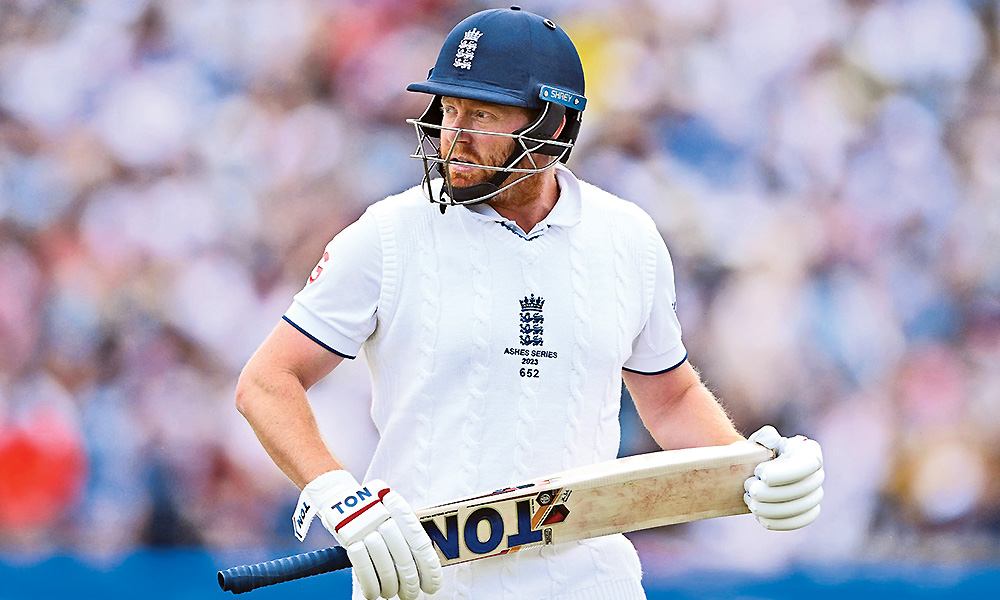
The Ashes controversies have always added spice to the occasion. The most recent such controversy was seen in the second test at Lord’s when the crowd displayed a pathetically substandard behaviour. Even the behaviour and manners of the members of the MCC sitting in the long room or outside in their enclosure were much to be desired. The unthinkable behaviour of bad manners and rudeness was amply displayed which shamed the elite members of this prestigious club. The brilliant Australian batsman Usman Khwaja was not only heckled but was bodily pushed around in the member’s stand as the English defeat became imminent. It was a typical sad reaction of the English when things are not going their way. There are quite a few such incidents where the English did not uphold the traditions of cricket as a sport of the gentlemen by shunning the sportsman’s spirit. It’s not cricket, when in the face of defeat self-respect, dignity and the spirit of the game are overlooked. The recent incident happened when Bairstow was officially given out stumped by Carey off Green as he casually walked about outside the batting crease. He had missed the ball which had landed in the hands of the wicket keeper and the action was still not finished when Bairstow carelessly stepped outside the crease. An appeal was made and the Umpire took the right decision according to the rules to give him out. The decision completely baffled the batsman and the crowd including the MCC members booed to no end. Cummins, the Australian captain could have withdrawn the appeal but he did not. At the closing ceremony, former England captain, Mike Atherton asked Cummins that wasn’t it an unsportsmanlike action? To which Cummins replied that it was their right to appeal but it was up to the Umpire to take the decision. Guy Lavender, the chief executive of the MCC took immediate action against the unruly MCC members and suspended the membership of three members forthwith. He issued a letter to all the members of the MCC to appraise them not only of his action but also to warn members to refrain from bad manners.
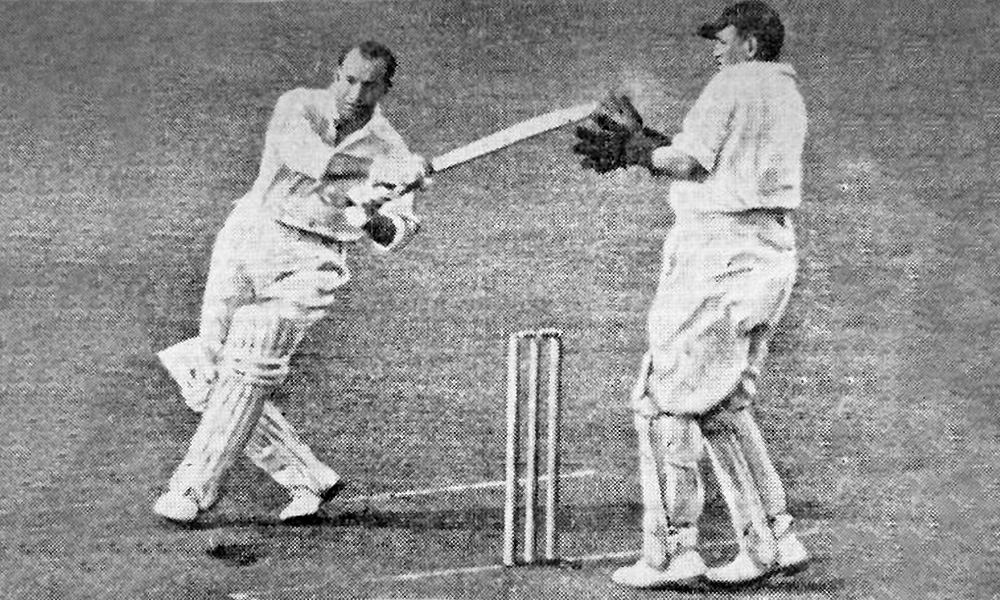
A similar little spoken about incident happened in the second test of the 1928-29 Ashes series, when Don Bradman was dropped for Alan Kippax who was touted as the next Victor Trumper. Facing a ball from seamer George Geary, Kippax planted his left leg outside the leg stump to meet the ball with a swing but missed. The ball thudded into his pad, dribbled around his leg and knocked the bails off. Kippax stayed put as the England fielders appealed to the other Umpire who saw everything and told Kippax he had been bowled off the pads. Kippax assumed that Wicket Keeper George Duckworth might have tempted to dislodge a stump using his knee as Monty Noble in the press box ranted that the decision should have been taken by the bowler’s side Umpire. As Kippax stood put at his crease, Jack Hobbs, standing near the square leg Umpire said, “What are you doing, standing there when you’re out?” The only instance of a bad remark by Hobbs. Kippax walked off flushed red with indignation. As he walked passed Harold Larwood, he heard him mutter a sharp expletive. The All India Wicket Keeper Batsman Dilawar Hussain who appeared for India in 1936 was often suspected and accused of keeping small pebbles in his mouth to blow away the bails of the unsuspecting batsman. His pranks and wit always brought much laughter in the game.
On December 13, 1947, Vinoo Mankad touring Australia with India on its inaugural tour, ran out Bill Brown on the non-striker’s end in the Sydney test. Mankad had warned him twice earlier to remain in the crease but Mankad had to stump him in his delivery stride as Brown was yards outside the crease. It angered a lot of people and a new phrase ‘Mankading’ was coined in a derogatory way but Mankad had done no wrong and was only following the rules.
In 1956, the MCC ‘A’ team touring Pakistan landed in trouble when they manhandled Umpire Idris Beg during the fourth test at Peshawar for making some unfavourable decisions. The tour was almost cancelled due to the ugly incident. It was at the intervention of Lord Altham and the President of Pakistan Iskander Mirza, the tour was completed but it certainly left a bad taste. Roy Swetman, one of the main culprits in the incident, is now 86 but was the youngest team member then. There was some disillusionment when Sir Garfield Sobers, touring Pakistan with the West Indies team in 1959, was given out lbw a few times. In Dacca test when he was given out lbw to Pakistan captain Fazal Mahmood, he was yards outside the crease. As he was walking away, Wicket Keeper Imtiaz Ahmed and Ijaz Butt, both told the captain to call him back as he was not out but Fazal ignored their counsel.
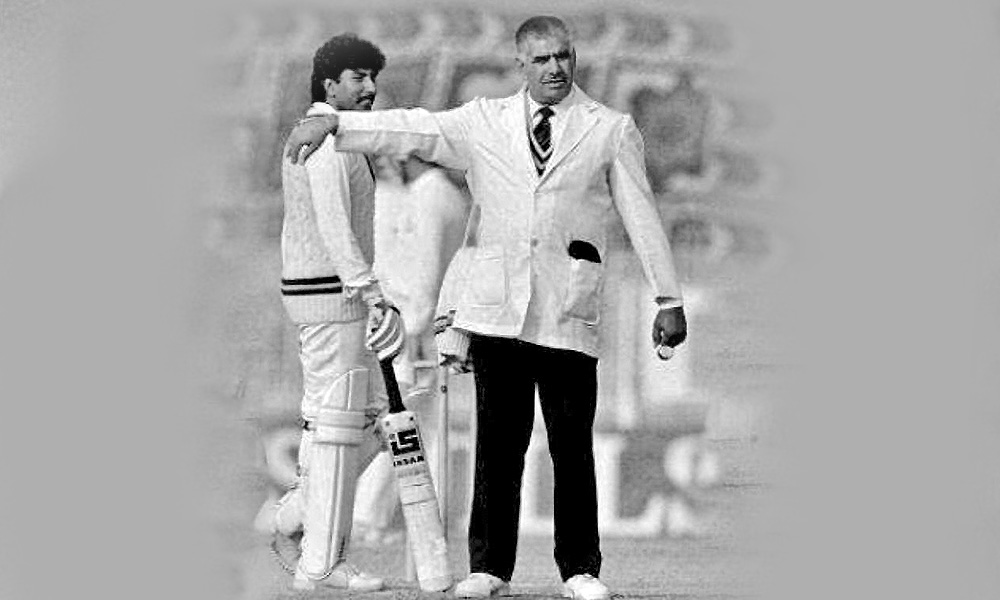
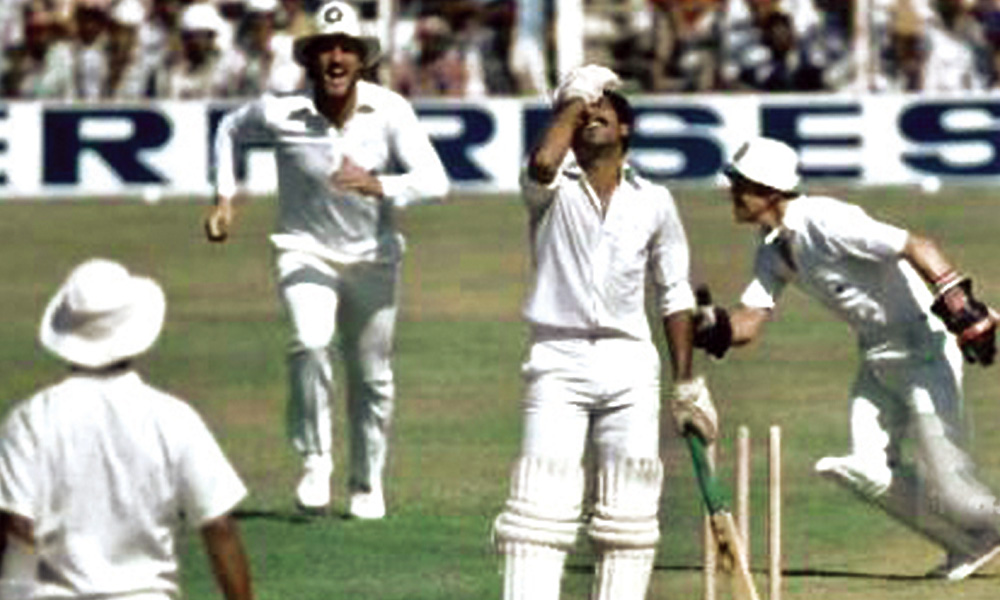
In 1981, Srikanth of India, making his debut at Mumbai against England was out in a similar way when he casually walked out of the crease before the ball completed its action and was stumped. In 1989 Srikanth was called back by Pakistan captain Imran Khan after being given out lbw to Waqar Younis in the ODI at Lahore between India and Pakistan. Technically the captain had no authority to call him back after being given out, but Srikanth was out next ball caught behind off Waqar Younis. In the second ODI between India and South Africa of the World Cup 1992, Kapil Dev stumped Kirsten in his bowling stride who kept going yards outside the crease, after warning him a couple of times. The incident between England captain Mike Gatting and Umpire Shakoor Rana is yet another glaring example of gross misconduct on the part of the touring captain. Shakoor Rana acted perfectly within the rules of the game and took an upright stance. The behaviour of the English captain was clearly, ‘It’s not cricket’. Every team wants to win but they need to keep their adrenaline in check to follow the rules of the game and never forget cricket is a sport of gentlemen.
It was in 1980 that the phenomenon was noticed.
Of course, there was already Ian Botham. He had been around for three years or so. 5-74 on debut at Trent Bridge, against Australia no less. As the visitors of the 1977 summer focused more on signing clandestine contracts of the Packer Circus, Botham followed up his Nottingham act with a crippling 5-21 at Leeds.
And when England toured New Zealand that winter, the Somerset youngster hit 103 and captured 5-73 and 3-38 at Christchurch, followed by another five-for and a fifty at Auckland.
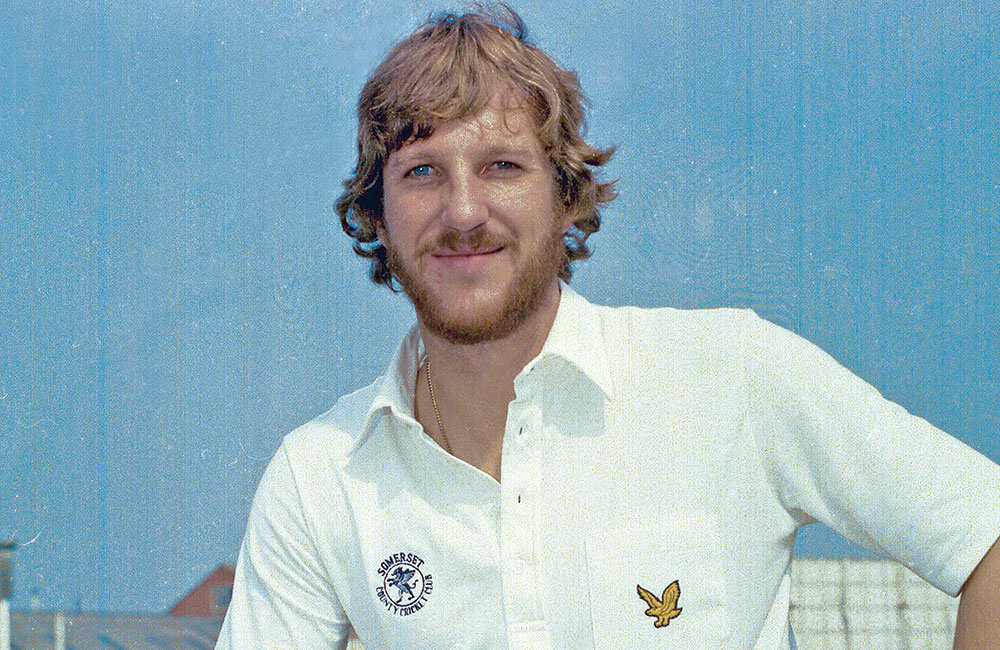
The following summer, as Pakistan visited, he hit 100 at Edgbaston. And if that was not enough, at Lord’s he hammered 108 and captured 8-34 in the second innings. By the end of the series, he had played eight Tests, averaged 49.88 with the bat and 18.05 with the ball.
It was difficult to maintain the sublime brilliance with both bat and ball, but Botham almost did so through the next 15 months. By the time he had won the Jubilee Test at the Wankhede virtually singlehandedly with 6-58, 114 and 7-48, he was unquestionably ruling the cricket world.
1,336 runs at 40.48 with 6 hundreds, 139 wickets at 18.52 with 14 five-wicket hauls, all within 25 Tests.
By early 1980, Botham had redefined the concept of the all-rounder. He captured the imagination of the cricketing world, especially the all-important English press. And he had reason to.
Pictures of him pushing a trolley alongside his wife Kate appeared in The Cricketer, even his footballing deeds were splashed across the sports pages of dailies. The all-conquering hero of the modern day. And he was given the captaincy against the incredibly powerful West Indies.
That marked a second chapter of the tale, but we need to pause here.
Curiously, Imran Khan and Richard Hadlee had already been around for a long, long time. Both were acknowledged as decent cricketers. It may be difficult to believe after all these years, but neither fit the bill as genuine all-rounders at the highest form of the game as yet.
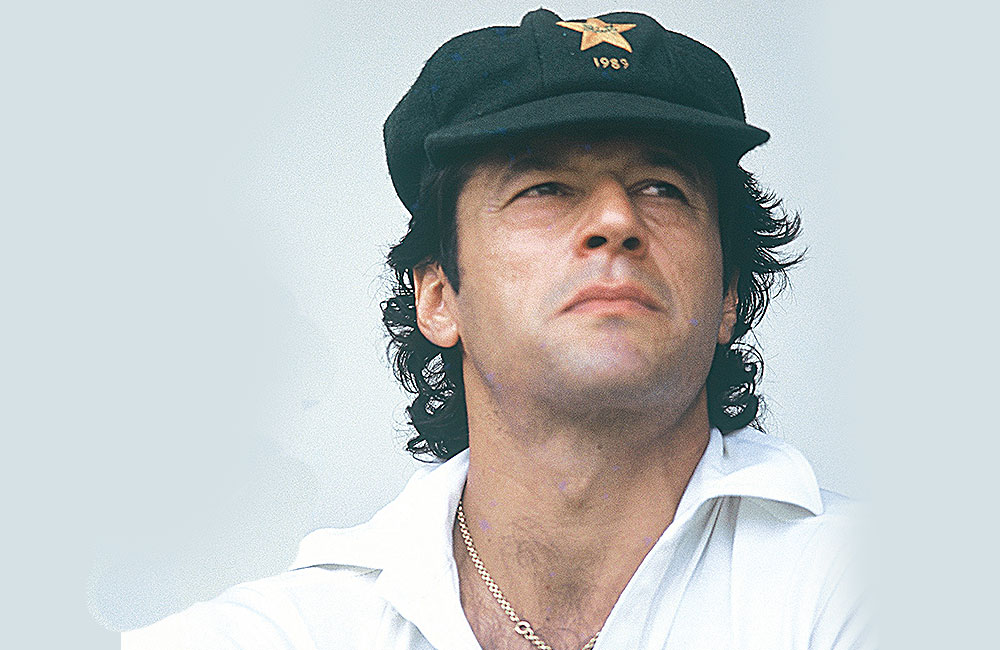
Starting from 1971, Imran had played 29 Tests up to the end of the 1979-80 season. He was a force to reckon with as a bowler, his 118 wickets having come at a decent 29.94. But as a batsman he had crossed 50 only twice in 47 innings, averaging in the low 20s with a highest of 59. He was at best a decent, fast-improving bowler who could be handy with the bat and give the ball a wallop when required.
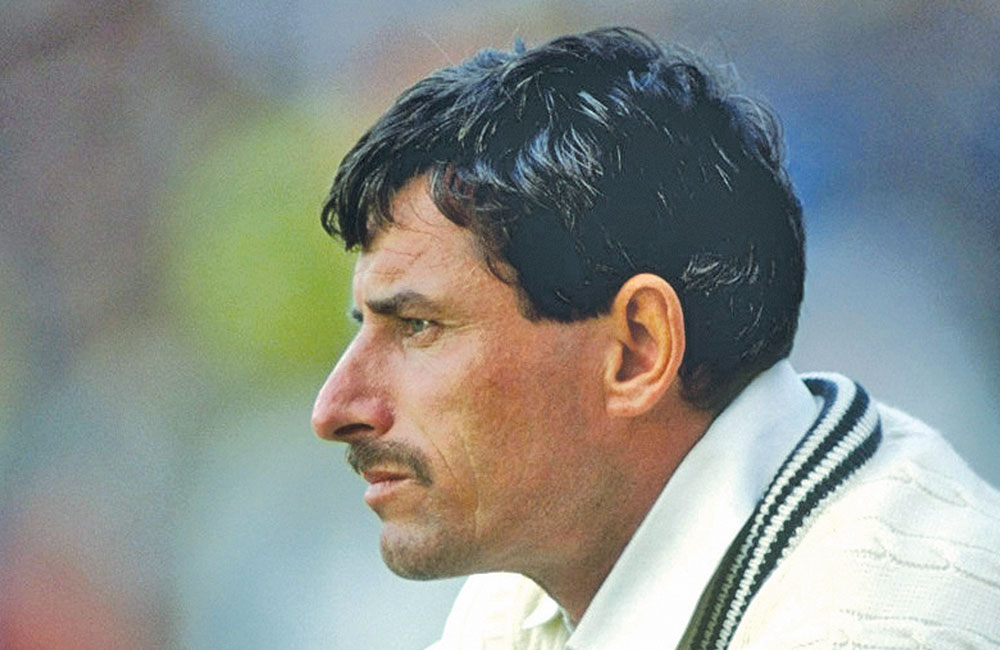
And by February 1980, Hadlee had emerged as an important cricketer for New Zealand. He had played 26 Tests since 1972 and captured 107 wickets at a decent but not remarkable average of 30.51. With the bat he was useful like Imran, averaging 20 for his 844 runs, hitting the occasional fifty.
In contrast, it was Kapil Dev who took off the blocks at a nearly Botham-like speed. From his lukewarm debut against Pakistan in late 1978 until the beginning of 1980, India played a huge gamut of 26 Tests. Kapil hammered a hundred against the Packer-depleted West Indians who toured in 1978-79, amassing 329 runs in the series at 65.80 and capturing 17 wickets to boot. A decent outing in the English summer was followed by the visit of the Kim Hughes-led second-string Australian side and the extremely strong Pakistan team for two long Test series. Kapil captured 60 wickets in those 12 home Tests, while averaging well over 30 with the bat. He was the first pace bowler who had bowled India to victories and looked like doing so frequently, while his feat of 11 wickets and 84 at Madras against Pakistan was quite close to the Botham heroics.
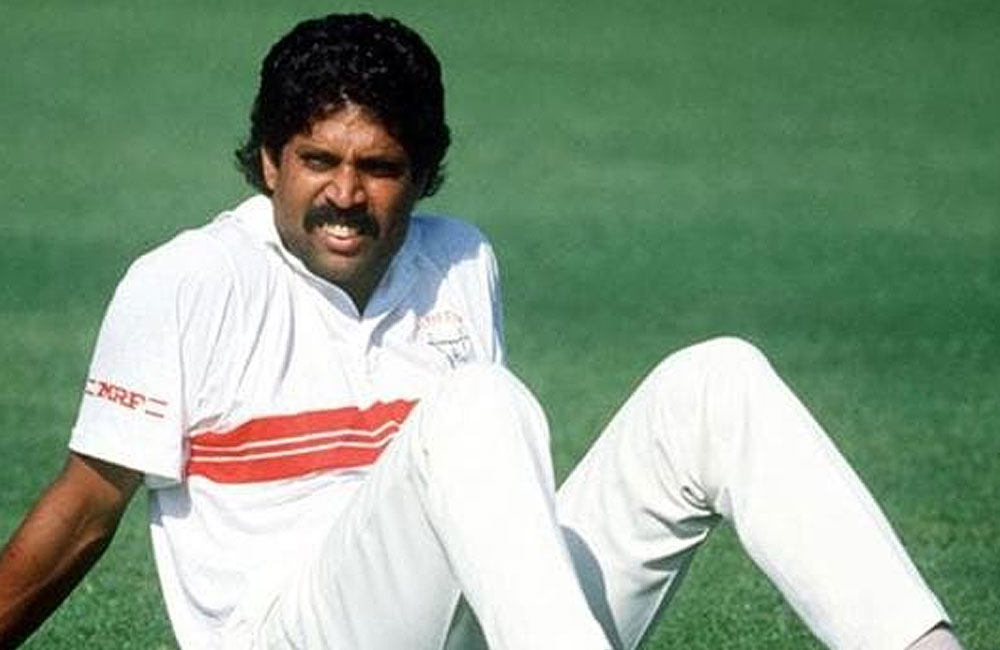
So, in those 26 Tests Kapil had captured 103 wickets at 26.77, an unprecedented average and strike rate for an Indian pace bowler. He had also gone past 1,000 runs at a very creditable 33.37.
It was Kapil who provided the second dimension of the all-rounders’ world at that juncture, the only other man who could boast a hundred – a solitary one – to go with his wickets.
The figures given below are as things stood before the Jubilee Test of 1980 and the West Indian tour of New Zealand that season. This gives a good idea of how distinct Botham was from the rest, and how Hadlee and Imran both lagged behind until then.
The four all-rounders until early Feb 1980 (before Jubilee Test at Wankhede)
M | R | Ave | 100s | W | Ave | 5WI | |
Botham | 24 | 1222 | 38.18 | 5 | 126 | 19.59 | 12 |
Kapil | 25 | 1023 | 33.00 | 1 | 100 | 26.73 | 6 |
Imran | 27 | 914 | 23.43 | 0 | 112 | 30.25 | 7 |
Hadlee | 26 | 844 | 20.09 | 0 | 107 | 30.14 | 6 |
Things, as stated earlier, changed in 1980. Curiously Clive Lloyd’s all-conquering West Indians were at the receiving end on both these occasions.
In early 1980 they toured New Zealand. In a highly acrimonious series marred by Caribbean fast bowlers shoulder-charging umpires and uprooting stumps by kicking them, Hadlee’s 5-34 and 6-68 along with his 51 in the first innings engineered a one-wicket victory at Dunedin. He followed it up with a battling 103 at Christchurch. The third dimension in the all-round view was emerging.
That winter the West Indians toured Pakistan. Imran chalked up his maiden century at Lahore, and ended the series with 5-62 at Multan. He had checked the boxes as well. The world took notice. There were now four competing all-rounders, all quick bowlers who could bat very well.
All had now captured the imagination of the fans. Botham the incredible talent, the man who could do anything. Kapil the rustic face of primal energy, the oddity of a pace-bowling Indian who could hammer the ball when needed, an instant folk-hero among his countrymen who had never had someone quite like him. Imran with his Oxford-educated sophistication and smouldering good looks, his aura magical in the subcontinent, with a fair amount of mystique in Sussex where he plied his trade as well. And Hadlee, the silent, brooding Hamlet-like figure from a largely obscure New Zealand, who was busy making that also-ran cricketing nation a real force to reckon with.
It became a four-horse race. All four did rather remarkable things over the next four years.
After struggling with the yoke of captaincy in the West Indies, Botham continued with his magic tricks in the 1981 Ashes, especially at Headingley, hammering 399 runs and capturing 34 wickets. He amassed 440 runs in India and followed it up with a career-best 208 amidst his 403 runs at 134.33 when the Indians toured in 1982.
Imran flourished with each series, enjoyed a fantastic tour of England in 1982, but never did his star shine as spectacularly as against India in 1982-83. 247 runs at 61.75 and 40 wickets at 13.95, including 11-79 at Karachi and 11-180 alongside 117 at Faisalabad – the last performance as good as anything Botham had achieved. His 1981-84 figures read rather miraculous.
Kapil, thoroughly upstaged by Imran during the 1982-83 series, was nevertheless named captain after the tour. He hit a hundred in West Indies, averaging 42 and captured wickets at a brisk rate. The following summer saw him hit 175 not out against Zimbabwe in an epic innings at Tunbridge Wells. A few days later he held aloft the Prudential World Cup at Lord’s. When West Indies visited India in a so-called revenge series, they mauled the new World Cup champions in every possible way. Kapil’s bat went silent but he captured 29 wickets at 18.51.
In the meantime Hadlee spent the 1981-1984 period capturing 128 wickets at 18.75 while scoring his runs at 30.50. He was the most silent of all, but with his feats becoming achieved with metronomic regularity for Nottinghamshire as well he never remained away from focus.
The cricket world did not remember four all-rounders ever ruling the game with such consistency and panache. The template was redrawn. The term all-rounder somehow became synonymous with someone who bowled fast and batted flamboyantly.
The four all-rounders between 7 February 1980 to the end of the 1984 season
M | R | Ave | 100s | W | Ave | 5WI | |
Botham | 49 | 2937 | 35.81 | 8 | 186 | 30.76 | 12 |
Kapil | 37 | 1460 | 27.54 | 2 | 147 | 28.37 | 12 |
Imran | 24 | 1109 | 42.65 | 2 | 120 | 16.05 | 9 |
Hadlee | 24 | 976 | 30.50 | 1 | 128 | 18.75 | 12 |
But there were problems.
Botham’s number of wickets was indeed inflated because of the enormous number of Tests England played. Similarly, Hadlee did not get to play as many because New Zealand remained ignored even as they were starting to become a strong cricketing nation.
However, the England all-rounder’s bowling figures had become somewhat less intimidating. From a great bowler he had been reduced to a rather good one. The ability to swing was reducing in inverse proportion of his increasing waistline. His batting remained as feared, and he was capable of holding his own in the top five, something the others could not quite claim. But even to a generation not quite statistically savvy, the highs of Headingley were becoming enmeshed with misgivings about the future. His failures against West Indies, the major challenge of the era, was becoming more prominent. Besides, the disciplinary issues that could have been overlooked during the early days of his magic were coming to light as the spells he conjured up became less frequent and less hypnotic.
There were many who basked in the memory of his Headingley high, many still do. But the signs were becoming rather ominous.
Kapil had managed to maintain his momentum, but his performances had gradually become unidimensional. The West Indian tour of 1982-83 had been an exception. Generally during this period he either fired with the bat or the ball, seldom both.
And while Hadlee’s only vulnerability remained the few Test matches New Zealand played, Imran matched the New Zealander’s number of appearances because of a series of injuries. Stress fractures became the norm, he played several matches, including the 1983 World Cup, as a batsman. His bowling required remodelling. One wondered how many cricketing days he had left.
The next few seasons saw the early tables – of the late 1970s – turned almost totally.
Imran recovered, remodelled his action, missed quite a few Tests. But when he did play his performances remained phenomenal with both bat and ball. He captured 10 wickets at Leeds as Pakistan won by an innings, followed it up with 8 wickets at Birmingham and finished the 1987 series with 118 at The Oval. If he had retired without playing another Test, which he intended to do at the end of the Reliance Cup, he would have had 2770 runs at 32.97 with 4 hundreds and 311 wickets at 22.19. Those would have been thoroughly respectable figures, phenomenal even. But he did come out of the retirement he announced and his end numbers are more intimidating. More of that later.
Hadlee had continued in the same vein and could by now vie with Malcolm Marshall for the title of the best bowler of the world. He also managed to score his runs with an average in the high 30s, while taking five-fors at will.
While Kapil’s batting numbers are quite impressive during this period, he did capitalise on some of the most benign batting surfaces in India. At the same time, his bowling had deteriorated rapidly. He went through a barren period with the ball, including an entire home series against Australia without picking up a single wicket.
But the worst of the lot was Botham. His admission to cannabis use earned him a ban of six months. When he came back to dismiss Bruce Edgar off his first delivery, thus equalling Dennis Lillee’s world record number of Test wickets, he was asked “Who writes your scripts?” He broke the record shortly afterwards and then blasted a quick-fire half-century, pretending that everything was rosy yet again.
When he hit 138 in the first Test at Brisbane during the next Ashes series, it produced a further misleading impression that the happy days were continuing. That was the final century he scored in Test cricket. After that Brisbane Test he limped through the last five and a half years of his Test career managing 426 runs at 19.36 and 23 wickets at 48.82 over 16 Tests. The fall as steep as his phenomenal early rise, and far more prolonged in terms of time.
The four all-rounders from 1984-85 season to the 1987 season
M | R | Ave | 100s | W | Ave | 5WI | |
Botham | 21 | 898 | 28.96 | 1 | 61 | 36.08 | 3 |
Kapil | 26 | 1185 | 39.50 | 2 | 64 | 35.95 | 1 |
Imran | 19 | 747 | 39.31 | 2 | 79 | 20.08 | 5 |
Hadlee | 20 | 802 | 38.19 | 1 | 120 | 19.57 | 11 |
The final years of these four great cricketers need a deeper look at the numbers.
Botham’s decline has already been discussed.
Coaxed back out of retirement, Imran remained a magnificent cricketer and his roles in mentoring, leadership and finally lifting the 1992 World Cup cannot be overemphasised.
On his return from retirement he started with 11-121 in the famous triumph at Georgetown, following that up with 9 wickets at Port-of-Spain.
However, while his numbers in this final phase read an impressive 51 wickets at 26.56, 23 of those wickets were captured on that Caribbean tour. His final 28 wickets came over 15 Tests at 34.87, and, more importantly, he bowled around 25 overs per Test during this final stage of his career, while he had bowled 39 per Test before that. He was no longer a genuine all-rounder in the true sense. He played more as a batter who was extremely canny with the ball, and in that role he was brilliant. Indeed, his final 18 Tests show more than 1,000 runs an astounding average of 61. He stuck to this role and perfected it. It is curious that he seldom ventured to bat above No 6 even during this period.
However, an average of 22.81 with the ball and 37.69 with the bat is unparalleled in Test cricket.
Hadlee retired first – if we discount the aborted retirement plans of the 1987 Imran. He was the only one among the four to do so in a blaze of glory. He had long gone past Botham’s world record number of wickets while the latter was still playing. He retired before the England all-rounder did, fully aware that the latter was too far gone to even try and catch up. In the process Hadlee became the first man to reach 400 Test wickets.
New Zealand did not play too many Tests and Hadlee had to stick around long and stay superbly fit to manage to appear in 86 of them. His 431 wickets came at a fantastic rate of more than 5 per Test, his 36 five-wicket hauls showing how important his role was in Kiwi cricket. New Zealand began to win with a semblance of regularity with his advent, and he accounted for 36% of the opposition wickets to fall in all Tests, and almost 41% in the victories. His batting, which can be justifiably said to be the least potent of the four, brought him an impressive tally of 3,124 runs at 27.16. He did not really decline and even in his batting he was ahead of Botham of the final days.
The four all-rounders from 1987-88 to the end of their careers
M | R | Ave | 100s | W | Ave | 5WI | |
Botham | 8 | 143 | 14.30 | 0 | 10 | 48.60 | 0 |
Kapil | 43 | 1580 | 28.72 | 3 | 123 | 30.26 | 4 |
Imran | 18 | 1037 | 61.00 | 2 | 51 | 26.56 | 2 |
Hadlee | 16 | 502 | 25.10 | 0 | 76 | 21.52 | 7 |
Hadlee’s numbers are put in perspective by Kapil’s efforts at going past his world record.
On 5 July 1990 Hadlee appeared in his final Test match. At that stage, Kapil was on 364 wickets having played 20 more Tests – a total of 106. The chase was hot for a while and then grew sluggish and finally painstaking. After a rather brilliant series in Australia in 1991-92, it was evident to all but the most devoted of fans that he was well past it. He played the occasional blinder, the 129 against South Africa at Port Elizabeth was a stunning innings as were the four sixes on the trot against Eddy Hemmings at Lord’s. But from the home series against England in 1993 onwards his bowling was only called upon when the ball was brand new or the tail was in. His bowling numbers did not suffer too much because he did not bowl that many overs.
It took him 23 Tests to take the 67 wickets to catch up with Hadlee, 24 to get past him and he retired after one more. It was not really the most glorious of exits. However, the fitness factor that allowed him to play 131 Tests as a fast bowler cannot be overlooked.
The final figures
M | R | Ave | 100s | W | Ave | 5WI | |
Botham | 102 | 5200 | 33.54 | 14 | 383 | 28.40 | 27 |
Kapil | 131 | 5248 | 31.05 | 8 | 434 | 29.64 | 23 |
Imran | 88 | 3807 | 37.69 | 6 | 362 | 22.81 | 23 |
Hadlee | 86 | 3124 | 27.16 | 2 | 434 | 22.29 | 36 |
The Legacy
All four of them were brilliant performers, three of them holders of the world record for the highest number of wickets, the other one generally acknowledged to be the best all-rounder alongside Garry Sobers and Keith Miller.
All four could do magical things with the ball, Botham and Kapil perhaps more potent in their early days, the skills of Imran lasting longer and Hadlee’s gifts not deserting him till his last day. All four were great strikers of the ball, Botham more adept to building long innings during the first half of his career, Imran during the last two-third of his, Kapil more prone to scripting the occasional innings of genius, Hadlee the same but a little less frequently.
The four of them co-existed with largely overlapping careers, and performed at simultaneous peaks during much of the eighties. This definitely had a far-reaching effect.
When we think all-rounders today we almost automatically think fast men who are good with the bat. Andrew Flintoff fitted the mould, Ben Stokes and Jason Holder do, Chris Cairns did.
When we look back the names that come to mind are Keith Miller, Alan Davidson, Tony Greig, Ray Lindwall, Trevor Bailey, Jack Gregory. Or the unfortunate South Africans we remember Mike Procter and Clive Rice. The ones more deeply rooted in cricket history can perhaps recall Trevor Goddard and, the more obscure, Tiger Lance. Each one of them was a fast bowling all-rounder fitting the template.
(When discussing Jacques Kallis we accept him but in the Sobers mould – a fabulous batsman who could also bowl like one of the frontline bowlers. That is a different category altogether.)
The combined influence of these four men in moulding our game-sense is so strong that we often ignore the claims of men like Ravichandran Ashwin, Ravindra Jadeja and Shakib-al-Hasan – champion all-rounders all. Even when we look back, Benaud comes across as the champion leg-spinner, and then we remember he used to bat as well. Ray Illingworth becomes the spinner who was the captain, Mushtaq Mohammad the superb batsman and captain who was handy with leg-spin. Further back Aubrey Faulkner’s figures make us take notice and then his being a leggie confuses us.
The spinner-all-rounder somehow is difficult to recognise because our perceptions have been long moulded by Botham, Imran, Kapil, Hadlee.
Very few have ruled the cricket world and the imagination like these four.
HYDERABAD: Pakistan’s cricket squad wasted no time diving into their rigorous training regimen as they embarked on their journey towards the ICC World Cup 2023 at the esteemed Rajiv Gandhi International Cricket Stadium in Hyderabad on Thursday.
This inaugural training session symbolized Pakistan’s initial steps onto Indian soil, setting the stage for what promises to be an electrifying tournament.
In a bid to prioritize safety and security, Pakistan’s first ICC World Cup 2023 warm-up clash against New Zealand, scheduled for Friday at the same venue, will be conducted behind closed doors.
The action doesn’t stop there. Pakistan is set to face Australia on October 3rd in their second warm-up fixture before officially launching their World Cup campaign against the Netherlands on October 6.
The Pakistan team arrived in India on a momentous Wednesday evening, ready to take on the challenge of the ICC World Cup 2023, which is slated to unfold from October 5 to November 19.
Under the watchful eye of tight security, the Pakistan contingent, comprised of 18 players and 13 support staff, made their way to the team hotel.
This journey from Lahore began in the early hours of Wednesday, involving a brief layover in Dubai before reaching their final destination in Hyderabad.
For those not in the know, the Pakistan cricket team, players, and officials faced delays in obtaining their Indian visas for the ICC World Cup 2023, sparking concerns within the Pakistan Cricket Board (PCB). In response, the PCB formally expressed its concerns to the International Cricket Council (ICC), citing the ongoing visa uncertainties and invoking the terms of the Host-Member agreement.
Here is the Squad for Pakistan’s squad in the ICC World Cup 2023:
Captain: Babar Azam
Squad Members: Abdullah Shafique, Fakhar Zaman, Imam-ul-Haq, Iftikhar Ahmed, Mohammad Rizwan (wk), Shadab Khan, Mohammad Nawaz, Usama Mir, Haris Rauf, M Wasim Jnr, Hasan Ali, Shaheen Shah Afridi, Saud Shakeel, Salman Ali Agha.
Travelling Reserves: Mohammad Haris, Abrar Ahmed, Zaman Khan
Pakistan’s warm-up match schedule includes:
- September 29: Pakistan vs. New Zealand in Hyderabad
- October 3: Pakistan vs. Australia in Hyderabad
Pakistan’s schedule for the ICC World Cup 2023:
- October 6: Pakistan vs. Netherlands in Hyderabad
- October 10: Pakistan vs. Sri Lanka in Hyderabad
- October 14: Pakistan vs. India in Ahmedabad
- October 20: Pakistan vs. Australia in Bengaluru
- October 23: Pakistan vs. Afghanistan in Chennai
- October 27: Pakistan vs. South Africa in Chennai
- October 31: Pakistan vs. Bangladesh in Kolkata
- November 4: Pakistan vs. New Zealand in Bengaluru (Day match)
- November 11: Pakistan vs. England in Kolkata
The day matches are scheduled to begin at 10:00 am Pakistan Standard Time (PST), while all other matches will be day-night fixtures, commencing at 01:30 pm (PST).
HYDERABAD: Pakistan’s versatile cricket captain, Babar Azam, expressed his deep appreciation for the warm reception he and his team received upon their arrival in India, where they are set to participate in the highly anticipated ICC World Cup 2023.
The Pakistani World Cup-bound squad touched down at the Rajiv Gandhi International Airport on a memorable Wednesday evening, escorted to their team hotel under stringent security measures.
This historic visit marked the Pakistan cricket team’s return to India after a hiatus since 2016. Their arrival sparked a surge of enthusiasm as a massive crowd gathered to greet them.
Despite the necessary security precautions, passionate cricket fans couldn’t contain their excitement, filling the air with cheers and chants for their beloved Pakistan team captain, Babar Azam. In a gesture of gratitude, Babar reciprocated with waves of appreciation.
Under Babar’s leadership, Team Pakistan is gearing up to commence their World Cup journey with a showdown against the Netherlands on October 6 in Hyderabad. Interestingly, this city will also host their warm-up clashes against formidable opponents New Zealand and Australia.
Here is the Squad for Pakistan’s squad in the ICC World Cup 2023:
Captain: Babar Azam
Squad Members: Abdullah Shafique, Fakhar Zaman, Imam-ul-Haq, Iftikhar Ahmed, Mohammad Rizwan (wk), Shadab Khan, Mohammad Nawaz, Usama Mir, Haris Rauf, M Wasim Jnr, Hasan Ali, Shaheen Shah Afridi, Saud Shakeel, Salman Ali Agha.
Travelling Reserves: Mohammad Haris, Abrar Ahmed, Zaman Khan
Pakistan’s warm-up match schedule includes:
- September 29: Pakistan vs. New Zealand in Hyderabad
- October 3: Pakistan vs. Australia in Hyderabad
Pakistan’s schedule for the ICC World Cup 2023:
- October 6: Pakistan vs. Netherlands in Hyderabad
- October 10: Pakistan vs. Sri Lanka in Hyderabad
- October 14: Pakistan vs. India in Ahmedabad
- October 20: Pakistan vs. Australia in Bengaluru
- October 23: Pakistan vs. Afghanistan in Chennai
- October 27: Pakistan vs. South Africa in Chennai
- October 31: Pakistan vs. Bangladesh in Kolkata
- November 4: Pakistan vs. New Zealand in Bengaluru (Day match)
- November 11: Pakistan vs. England in Kolkata
The day matches are scheduled to begin at 10:00 am Pakistan Standard Time (PST), while all other matches will be day-night fixtures, commencing at 01:30 pm (PST).
What is about the Pakistanis talking passionately about cricket? It’s in every household you find, even the wives in the kitchen discussing merits and demerits of square turners or each child out there in the streets or playgrounds in the peripheries sweating, running, hushing, panting, arguing, and clobbering the balls out of the park, or a fast bowler rattling the stumps. It seems everyone in Pakistan is habituated to this beautiful game.
Cricket, though only played in a handful of countries, unlike football, there are only twelve Full ICC Members allowed participating in Tests. What is it about the Pakistani heart that flutters with each ball bowled or each shot executed? What is it about the mere sight of a cricket star, the mere accidental brushing of his shirt can send the Pakistani devotee into unending raptures? Why is cricket the be all and end all of existence for most of the people of Pakistan?
Pakistan is an under-developed country, though contrary to its economic reality and one of the nuclear powers, the governments out there have been struggling incessantly to control the rising inflation, which is unprecedented, to handle the USD-Pakistan Rupee disparity and the monthly electricity bills compelling people to beg, borrow, steal, or even commit suicide.
Still, it’s a place full of people who long to find a reason to wriggle out of their depressing routines, distressed people looking for some sort of anodyne to conciliate their worn beliefs. But then, is a cricket stadium, inside where is played a cricket match any better than the populated, wearying roads either in Karachi or Lahore or even Rawalpindi, where confusion overrides the shrillness of a million cars hooting in lunatic unanimity? Perhaps the drivers inside their automobiles are using horns oblivious of the noise pollution to seek a prompt escape from the insanity all around. Inside the cricket stadium, perhaps the crowd does.
Contemporary Pakistani society co-exists as a hybridized collection of people that has been forged by deep rooted ethnic and ideological exchanges, a process that continues to this day. In the 1950s in Pakistan, the imprints of colonial rule and the Anglo-Saxon values were still in vogue.
Lahore Gymkhana members was one of the examples. Cricket was a favorite pastime of the bureaucrats, senior officers, a few from the military and others. The facilities were well kept and there was a palpable divide within the clubs. Some from the cosmopolitan parts, others where cricketers from lower middle or middle class created a space and excelled. One could highlight the local element that, over time, was instrumental to the production of a distinct Pakistani form of expression and identity, which manifested itself both on the cricket grounds and off.
Interestingly, the talent was prevalent amongst the locals and not on display by the elite. A few cricketers from the top colleges and universities emerged, most were from the lower socio-economic backgrounds.
Clubs from the thickly populated areas described Pakistan cricket’s evolution, the influence such cricketers and infrastructure have had in enhancing the depth of population’s relationship with cricket, as well as its role in creating a fledgling regional identity. Ironically, cricket was also individual centric, some of the influential dominating the fray, even governance of the game. It needed to devolve, and representation had to be given to all the stakeholders regardless of their social or economic status. It was prevalent in the 1950s and ironically it still coexists in times when cricket has become one of the most thriving industries. We are still stuck in the 1950s, even worse.
The current times elucidate PCB has gone down on its knuckles. For a minute it appeared Pakistan had conceded to Jay Shah. It hurts bad. What are the factors, requirements, dependence or interdependence, commercial or self-interest that compelled Zaka Ashraf led Management Committee of the PCB to kneel down and agree to whatever was being dictated to them?
A meek PCB virtually wiggling their tail and have been acting as Jay Shah’s lapdog is hurting. It leaves us exasperated and genuinely incensed. Who is Jay Shah? His claim to fame is not cricket administration not that he is Asian Cricket Council’s President and Secretary of the Board of Cricket for Control in India (BCCI) but the solitary attribute is being son of Amit Shah, Prime Minister Narendra Modi’s closest associate in the ruling Bharatiya Janata Party (BJP). Honestly, Shah hasn’t evolved as a cricket influencer. He seems to be a pampered son of a powerful father left in a candy shop. Shah can’t even come close in the league of Jagmohan Dalmiya, Inderjit Singh Jeet Bindra, M. Chinnaswamy, S.K. Wankhede, Madhavrao Scindia, Raj Sing Dungarpur, even Sharad Pawar, Shashank Manohar, or N. Srinivasan and Anurag Thakur despite all their allegiances & controversies were hardcore professionals.
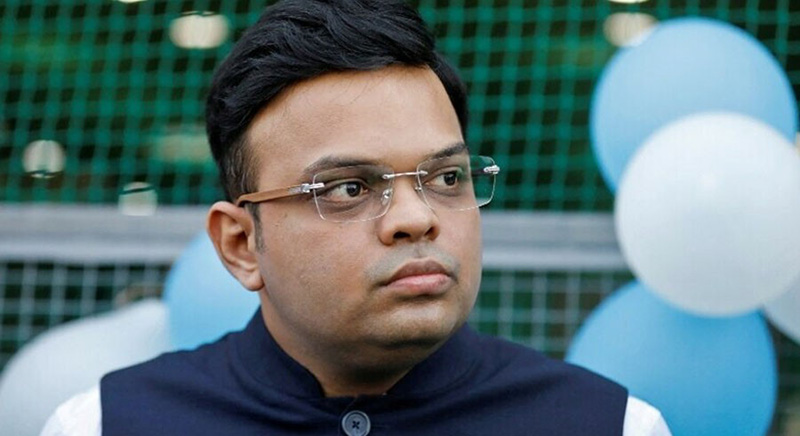
For us Jay Shah was irrelevant, someone we weren’t bothered about. His tantrums, his parochial presence and high headedness weren’t winning him friends however India’s deep market, the Indian Premier League’s multi-billion dollar brand, the corporate outlay and revenue generation has left the cricket world polarized. Even the developed boards and top teams heartily submit to BCCI’s massiveness.
Cricket is huge in India. Almost all the top broadcasters, production houses are Indian. This makes people like Jay Shah to lose touch with reality.
His pretentiousness is false and how he has showed up recently in lieu of the drama hounding Asia Cup 2023 leaves him exposed, seemingly not working for what he has been assigned the high offices but proliferating BJP’s political agenda based on an anti-Pakistan narrative is an abysmal spectacle.
Pakistan by rotation qualified to earn the hosting rights of the Asia Cup 2023. While the PCB contemplated bringing the region’s most prestigious cricket tournament to Pakistan, for the first time since 2008, also focused excitingly on organizing the ICC Champions Trophy in 2025.
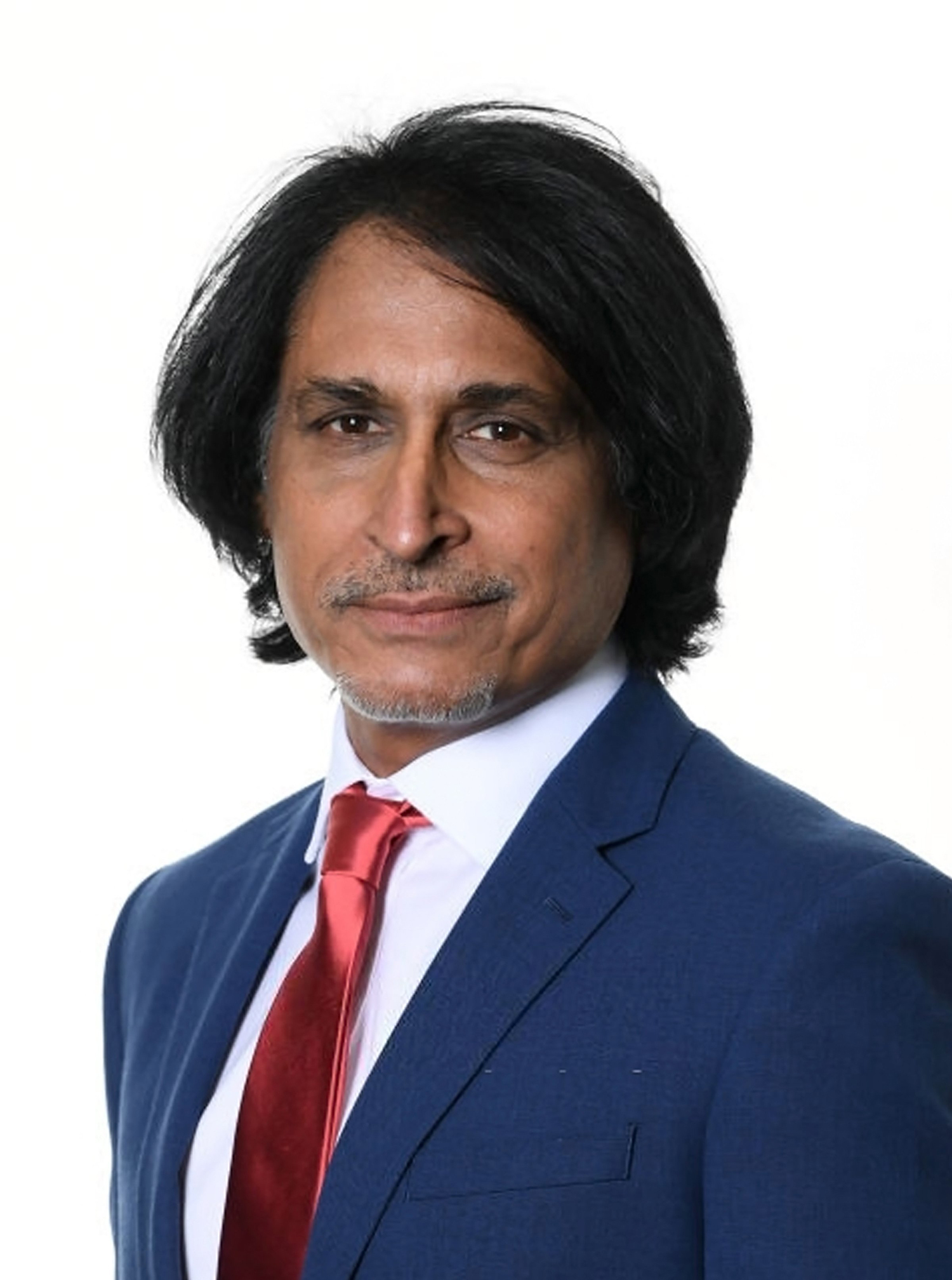
Ramiz Raja was PCB’s Chairman when the first meeting of ACC Executive Committee took place. Soon after Najam Sethi took over as Chairman of PCB’s Management Committee. A journalist, erudite, natural speaker and one of the high ranking television casts, to win a popular vote announced Pakistan were the event hosts and that the entire Asia Cup 2023 will be held as scheduled in the country.
Soon, India refused to come to Pakistan. As it was, Pakistan should have taken a firm stance. They should have put their foot down and decided to go without India. It wasn’t as simple as it seemed. Pakistan due to the quality of men they picked to lead the PCB, significantly after the commercial revolution changed cricket didn’t really inspire the rest of the world. Two, International Cricket Council, unlike FIFA, is only a legislative body dependent on votes of the Full Members, though unannounced submitted to the BCCI because of the magnitude of returns and income they attracted. Though harsh, as it seems rest of the cricket playing world including the ICC have been held hostage. Top teams and boards despite having progressive policies, revenue and consumer attraction interspersed with formidable infrastructures have also fallen to IPL’s massiveness and commercial depth. Each player contracted by the IPL franchises not only gets the most lucrative contracts but their home boards also share the revenue. Initially, the cricket world was polarized due to ideological differences, now the polarization is between rich and the poor, top and the lower tier teams, and their commercial viability and demand. BCCI despite their team not having won a single ICC tournament since 2013 continues to dominate, unconditionally. Honestly, they need another Mahindra Singh Dhoni reincarnated to get them the trophies.
Back to Asia Cup 2023, Najam Sethi only to boost his image and a popular narrative announced that if India won’t travel to Pakistan for the Asia Cup 2023, Pakistan wouldn’t reciprocate travelling to India to participate in the ICC World Cup 2023. India, as expected, asked them to suit their convenience. To marginalize the hostility, as expected Najam softened his stance, and made slight modifications like leaving it to the Government of Pakistan to allow or disallow the team travelling to India. As it transpired the then Prime Minister formed a high powered committee to take a decision. It was only a hogwash since PCB wouldn’t have dared losing their revenue share according to the new model which reserves 38.5% share for the BCCI will be picking USD 34.5 million in the 2023-2031 cycle (5.75%). India will be having USD 231million annually.
Violating ICC’s playing agreements could jeopardize their revenue share, also their survival depends largely on what they get from the ICC. PCB, a centralized board, averse to democratization or decentralization feeds the parasitic regional associations. Therefore, as expected the high-powered committee headed by the Foreign Minister of Pakistan agreed to send the team to India to participate in the ICC World Cup 2023. This left Najam Sethi’s narrative shorn to pieces. I must acknowledge, various PCB managements failed miserably to reinforce their own business models, broadcasting deals, development of state-of-the-art infrastructure and to develop their domestic cricket properly entailed with tier cricket and player pathway programmes.
They couldn’t even come up with introducing top systems and human resource training schema. Unfortunately, most of the chairmen installed weren’t from the corporate world or hands on cricketers barring Ramiz Raja, recently therefore they remained irrelevant to the ICC and other developed boards. They didn’t have the voice and no reason to be heard in the meetings or on the committees. Today what BCCI is a result of complete refurbishment they undertook in 2007 successfully launching a multi-billion-dollar Indian Premier League. India was never a force to reckon with in the region. Pakistan dominated.
Such was Pakistan’s presence, their President of the BCCP and ex-captain A.H. Kardar had stood up to end Australia and England’s rights of veto by consolidating the narrative of all Full Members being equal. It was Kardar, who to have a strong regional voice introduced the formation of the Asian Cricket Council.
How Sri Lanka were supported to ascend to become the Full Member of the ICC or how even club cricket in Bangladesh was sponsored and strengthened by allowing local Pakistan players to participate in their tournaments. Even, India couldn’t match Pakistan as a team. Pakistan were always the favourites. Where we regressed, BCCI and India strengthened their economy and now virtually hold world cricket in their grasp.
Once, Najam’s narrative was busted, next he started echoing another proposal of having Asia Cup 2023 played based on a hybrid model. Initially to favor his friends at the Emirates Cricket Board, so it was said desired the tournament to be moved wholly to the United Arab Emirates, a neutral venue. He was stopped by his people since this could jeopardize Pakistan’s right to host the ICC Champions Trophy in 2025. Next, he wanted the matches involving India could be played at the UAE.
PCB and Najam were shocked to find out Sri Lanka, Bangladesh and India had refused playing there because of intense heat, not to take chances ahead of the ICC World Cup 2023. This was a farce. Asia Cup 2022 was to be held in Pakistan, they gleefully swapped it with Sri Lanka. Sri Lanka were having political and economic crises therefore the championship was held at UAE. Heat wasn’t in question then. To them hosting T 20 Internationals was easier because of the flexibility of the timings as compared to 50 over matches.
At the backend, it was understood Sri Lanka had become BCCI and Jay Shah’s lacquey. Where Sethi was inclined to help the ECB and his friend Sultan Zarawani, Jay Shah was eager to take bulk of the matches to Sri Lanka, BCCSL’s President being close to him. It’s a fact Najam Sethi had highlighted whether in Sri Lanka and significantly in Colombo had to be precarious with forecasts of incessant rain.
Eventually, supported by the BCCI, nine matches were shifted to Sri Lanka and Pakistan were left with only four. PCB chucked and knelt. It was the beginning of the disaster.
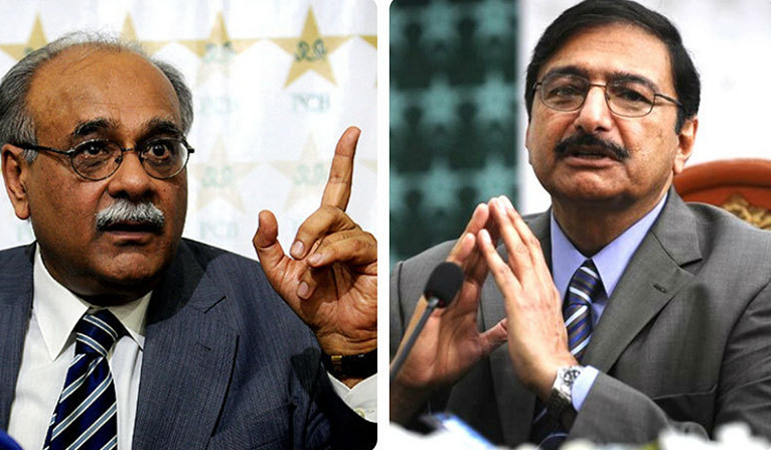
Furthermore, Zaka Ashraf, having replaced Najam Sethi as Chairman of the Management Committee of the PCB while in South Africa to attend the ICC Meeting, on the sidelines met Jay Shah, President of the Asian Cricket Council and invited him to visit Pakistan to witness the part of matches scheduled in Lahore. Soon, everyone was pleasantly surprised to be told Jaya Shah had accepted the invite. Inside a few hours, Jaya Shah denied having been invited or having accepted the invite, if ever. This left Zaka Ashraf run PCB overwhelmingly embarrassed.
I may also ask softly why the Asia Cup 2023 Kits are without host nation Pakistan’s name? This anomaly was first highlighted by Rashid Latif in his post. Imaginative & detailed as usual. And he used photographs for reference. It is mind boggling? Let’s get into the details & try figuring out what could have been the reasons? Let’s first mitigate and get to the facts.
The decision about hosting 4 or 5 matches in Pakistan & rest in Sri Lanka was announced End May & early June 2023. Therefore three months were enough to contemplate all clauses of the hosting agreement.
Chaudhry Zaka Ashraf, Chairman Management Committee of the PCB was to announce the tournament itinerary and had arranged a huge function at Lahore in July 2023. Before he could do that, J Shah, Secretary of the BCCI & President of the ACC announced it on the digital media. The schedule was announced and it was well known that 4 matches will be played in Pakistan. And the host agreement hadn’t been signed until then. So there seemed no reason Pakistan not being mentioned on the kits as per the past precedence. What went astray?
Let’s dig further- While Najam Sethi was the Chairman Management Committee, the hosting predicaments & solutions were in their embryonic stages. It’s true he first wanted the entire tournament to be hosted in Pakistan & rightly so. Consequently, India refused to come to Pakistan. Then the discussion about shifting the entire tournament to the United Arab Emirates with Pakistan holding the hosting rights was discussed.
Najam Sethi was inclined yet a very pragmatic man, he listened to the other members not to make it a precedent ahead of the ICC Champions Trophy 2025 of which Pakistan is the host. To avoid stalling it, Najam came up with the concept of a hybrid model. Now the question was who’ll be the hosting partner (not the co-host) UAE or Sri Lanka.
Pakistan favored the UAE but Sri Lanka cricket & their Chairman have warm relations with India. Jay Shah, the ACC Chairman voted for SL. SL were aggrieved when the last time in 2022 despite having swapped hosting rights, they hadn’t been able to stage the tournament in their country because of a handful of reasons and the entire tournament was organized in UAE. They needed compensation. Bangladesh, Sri Lanka & India vetoed UAE as the potential host on the context that hot weather would be the main impediment. None looked into tricky Sri Lanka weather where rain is likely to interrupt crucial matches therefore Sri Lanka were awarded the 9 matches.
Now, the real issue, even though the Asia Cup 2022 was held in UAE still the kits carried Sri Lanka’s name. Why not Pakistan’s name mentioned in Asia Cup 2023? There is more to it. Had Pakistan brought mention on the kits of all the participating teams it would have augmented their brand blue and familiarization at least to 1.3 billion people in India and their market? It hadn’t transpired. Ironically, this time even the year of the tournament isn’t mentioned?
Let’s suppose Pakistan wins the Asia Cup 2023. And the value of its merchandise will soar through the roofs? No Pakistan is mentioned as a host, no year of the tournament is there. By mentioning the host nation’s name the brand value, familiarization, good will and such other dispensations could have been attracted. Suppose Virat Kohli or Rohit Sharma wore the logos with Pakistan mentioned. It would have been huge?
What went wrong? Interestingly much before time Zaka Ashraf launched Pakistan’s ICC World Cup 2023 kit with India mentioned under the ICC logo being the hosts. Each superstar including our own Babar Azam & Shaheen Shah Afridi would be wearing it. Ironic, we didn’t even whimper when such a huge thing had happened where Asia Cup 2023 kits are without Pakistan’s name. Watch it. To us it’s a smack on our integrity and our self-esteem hurts.
Instead of the custodians of the tournament @AsianCricketOrg coming up with an explanation why @TheRealPCB trying to respond. Why should host Pakistan’s name be missing from the kits of all the participating teams? Why? ACC is a Council of Cricket boards not a Cricket board, itself. By norms, all decisions of a council are cascaded to independent members via minutes, declaration or notification.
Councils are not run on ‘internal’ communique, like a board. Not in writing means it never happened. We expected a robust response from the PCB on Jay Shah’s demeaning, instigating & deplorable statement. Jay Shah, President of the ACC & Secretary of BCCI has given a statement, undiplomatic, indignant, unwarranted, superfluous & damning for Pakistan.
Preposterous, based on cockeyed perceptions & evident bias. He has tried to demean Pakistan. He wrongly implies accepting the PCB request of the hybrid model in lieu of the Asia Cup 2023. He may well be the President of the ACC & Secretary of the BCCI still he is no one to accept or reject the request from a Member country. Such decisions are approved by the ACC Executive Council. Furthermore, Jay Shah in his capacity as Chair of the ACC has no jurisdiction or allowance to comment on the economic status of Pakistan or the PCB.
It’s embarrassing that the President of the BCCI, Vice President of the BCCI & Director BCCI are in Pakistan & their Secretary discusses the host country’s economy and frequent change of the PCB Chairmen. We may not agree with rapid changes at the PCB but it remains our internal matter.
How Jay Shah could intrude in our domestic & personal matters. Highly condemnable & undiplomatic statements have come from him. Jay Shah talked about Pakistan’s economic difficulties as one of the reasons not to host a complete set of Asia Cup 2023 matches forgetting that Sri Lanka’s economic status isn’t at par with the US or any developed country and they are surely not loaning money to Russia. They are even worse, downtrodden.
He mentioned Pakistan as a place for security concerns. Would he mind asking Australia, England & New Zealand teams having played complete series here about the security arrangements, hospitality & other paraphernalia. Useless arguments he tried to come up with. He talks about SL as hosts getting the Asia Cup 2022 to UAE & tries to be imaginative discussing heat & possible repercussions, to be less in T20s than in the ODI tournament. Timings could have been changed instead of jeopardizing the complete tournament by having staged in the rain hit Sri Lanka. More, why in Colombo already inundated and not in cities like Hambantota.
With the BCCI President in Pakistan & the PCB writing to ACC to get the Super 4 matches shifted from Colombo to Hambantota and having it accepted later to be vetoed, one ended by Jay Shah left his President of the BCCI embarrassed showing he is stronger than his superiors at the Indian board. As ACC President would Jay Shah mind giving clarification on host country Pakistan’s name not inscribed on the team kits? Where and when the decision was taken? Was it minuted? Who took the decision? Under which agreement or amendments it was decided to exclude Pakistan’s name as hosts from the team kits?
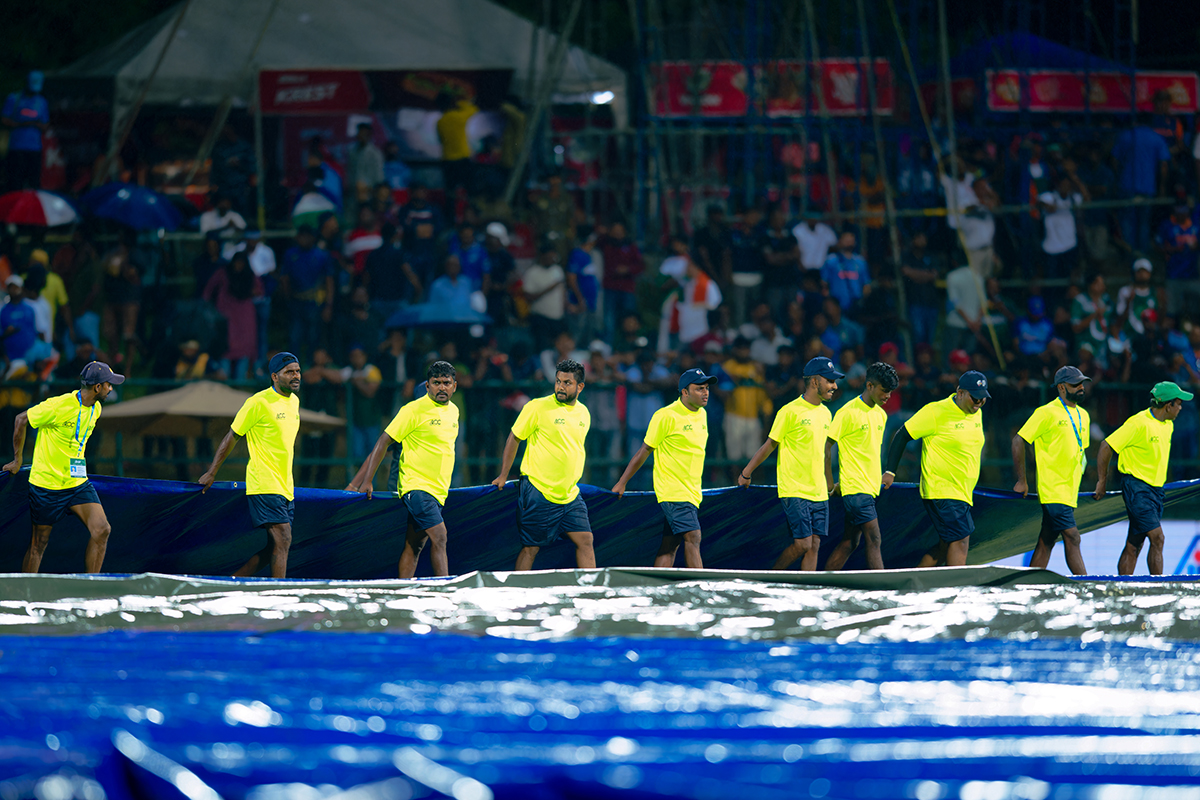
Overall Jay Shah’s statement was a hogwash & we sincerely hoped PCB sent a befitting reply. They didn’t. The rain forecast in Colombo couldn’t deter Shah. What could have been the reason? To erode Pakistan’s revenue base through inventory loss or to consolidate his hegemonic presence showing Pakistan wags. Honestly, optics aren’t encouraging. It clearly depicts PCB has been clueless and without any bravado to seek their rights.
Instead of intruding in PCB’s internal matters or discussing Pakistan’s economy Jay Shah needed to focus on how big a mess he had created around Asia Cup 2023. And furthermore, failure to come up with a viable itinerary of the ICC World Cup 2023, he was required to focus on hosting the competition, inflicting a massive USD 58 to USD 116 million on the BCCI in lieu of tax exemption. BJP and not BCCI official were smelt in Jay Shah’s statement. Now, leaks from the PCB reveal Zaka Ashraf is incensed and contemplates the Chief Operating Officer and other stakeholders had let him down. Whatever, Pakistan’s credibility has been ruined. Why?
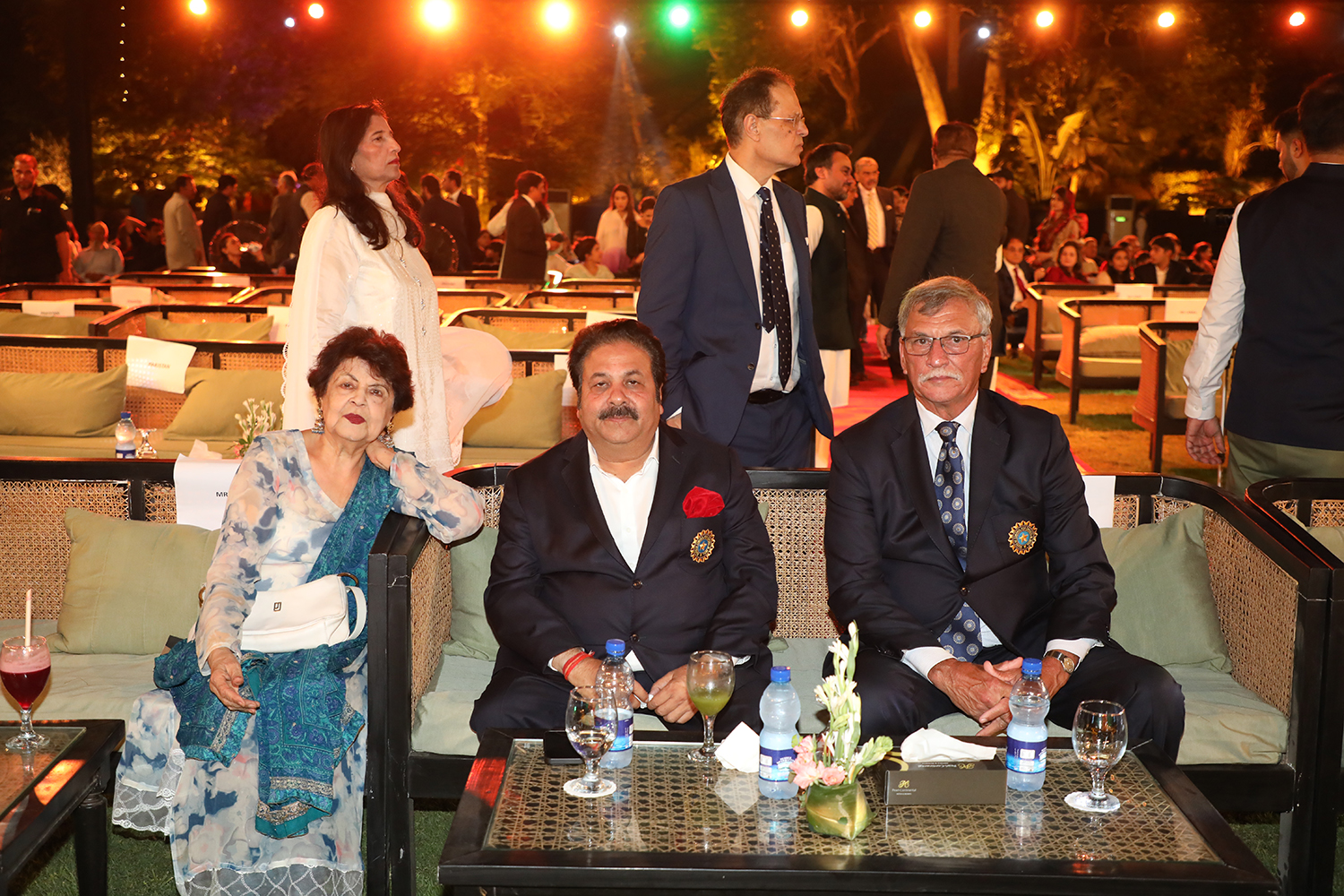
Ironically, Zaka Ashraf, Chairman of the PCB Management could only show his affluence when he hosted lunch in honour of the Governor of Punjab, President of the BCCI Roger Binny, Vice President of the BCCI Rajiv Shukla. He hardly has a connection with the middle-tier or people from the low- or middle-class population. Like many in the past, he has been asked to run the board. Interestingly, though in his third tenure, he has had nothing or little to do with cricket.
Such actors, because of their ceremonial and high-ended presence can generate elements of an elitist hierarchy, using cricket to fit their local more bureaucratic environment whereas Pakistan requires a democratized model. Such has been their high headedness, at times, the evident disconnect with majority of the cricket playing population couldn’t facilitate them to accept the local expressionse.
Najam Sethi, Chairman of the Management Committee of the Pakistan Cricket Board has been in the news. Amidst reports he may well not see his tenure extended or to return as Chairman of the PCB through nomination by the Patron of the PCB, the Prime Minister Islamic Republic of Pakistan. Sethi, has his own style, though now in his seventies, he still shows willingness to adhere to power.
It’s not him, most of the lot, a generation before us still coexists with a complex that experience is the only attribute making them indispensable. And the worst, Pakistan cricket has gotten stuck between redundancy and transition. Most of the lot with Sethi, is of those with conventional wisdom and the ones believing in self-service. How the elections have been conducted in most of the regions, though in accordance with the 2014 constitution, still people announced on the regional committees are the like-minded, wreaking nepotism. And sidelining the more robust and doers, Sethi, as one sees has been surrounded by youthful ambitious population which isn’t really the stuff required to properly implement the relevant policies.
Sethi, obviously has a clout, a man well connected in the cauldrons of power and a seasoned journalist somehow the other manages to curtail criticism and most of the journalists wink at whatever is being done at the PCB, obviously masking the wrongs.
Recently, we had seen a Chairman of the Management Committee having a prescribed agenda, he hasn’t been proactive doing what was expected to be done rather he has taken decisions which may well not fall in his ambit until he is elected (or handpicked) as Chairman of the Pakistan Cricket Board. So much has happened without any noise created around him- that’s his success.
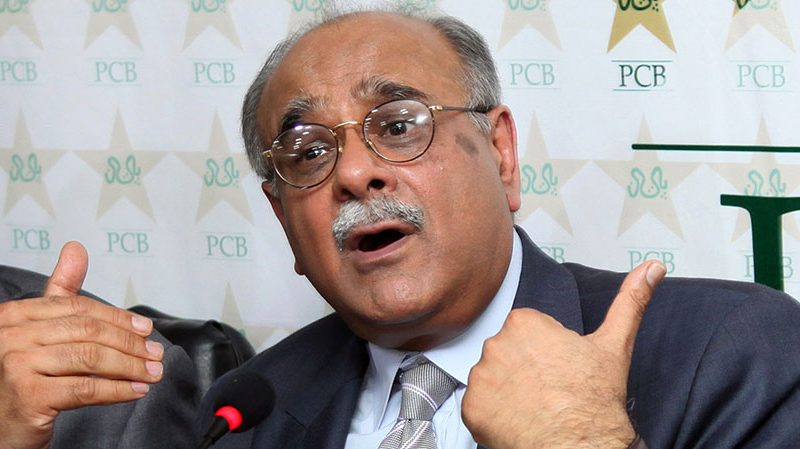
The surrogate ‘betting’ companies allowed to sponsor the franchises of the Pakistan Super League, the advertisements being run on PCB broadcasts on different specialized sports channels, even the crypto currency campaigns etc. and still Sethi led PCB had not been able to marginalize or eradicate the unconstitutional presence of such enterprises. Worse still, Sethi’s desperation to have Micky Arthur on board saw him making mockery of the existing models internationally having him as an ‘online’ Pakistan team Director and the others he picked include Grant Bradburn as Head Coach seemingly is a result of over-dependence on one man. It could have been much better though top international names and coaches may well not be affordable therefore sticking to Micky may well be rationalized. Nonetheless, why didn’t we have local coaches is another debate. Still better foreign coaches are hired for places like the National High-Performance Centre, to train the trainers in different genre including the local coaches and identify the contemporary requirements and to establish unblemished developmental pathways.
Disheartening it has been to see the Pakistan Super League virtually now held hostage by the six franchises and the PCB not allowed to add more teams. Furthermore, having attracted international cricket back to Pakistan, out of desperation even went astray proposing PSL IX to be moved to the Emirates and all based on flimsy excuses. There are couple of factors which will hurt the Pakistan Super League. Hegemonic presence of the franchise stakeholders, the draft versus auction argument, and to increase the outlay by having more teams, more commercial airtime, and more opportunities to impregnate the broadcast revenue. To all intents and purpose, the on-ground advertisement and title sponsors play only a limited role nonetheless broadcast rights and monetization of the content is the real earner. Even the main sponsors, the logos on the kits etc. only spur limited income.
What’s more significant is the broadcast revenue. PCB sold the Pakistan Super League VII and VIII broadcast rights for Rs 4.4 billion. These were picked by ARY Communications and the Pakistan Television. It was indeed huge since the broadcasters for the first time bid for the PSL rights unlike in the past where despite a conflict of interest, a business house was the acquirer, also the seller using specialized channels as carriers. Reportedly, the business house that picked the rights for the first six editions of the PSL since 2015-16 ended up defaulting on payments besides the broadcasters feeling the need to syndicate rights of a league that had become a saleable brand. Though presence of multiple sports channels within the territory of Pakistan encourage competition and may well help the PCB attracting more money in lieu of the rights selling still another conflict of interest though legally cosher saw ARY Communications owners of one of the six franchises of the PSL successfully bidding for the PSL VII and PSL VIII broadcast rights along with the state-owned Pakistan Television. It fetched PCB handsome amounts.
Pakistan’s market outlay must increase and that is only possible if the already existing franchises come up with a twelve-month calendar of commercial and social activities and prepare high tier content for broadcasts. Lahore Qalandars is the only franchise which has encouraged such activities.
PCB and the six franchises are required to create parallel content, the merchandise, the fantasy leagues (much better than to have surrogate advertising by the gambling sites) and to spin money around the main product.
Two, they’ll be required to increase the number of teams and to get into the auctions rather than the mundane draft system which is equally ‘tampered’. Money offered to international players must increase and obviously it won’t be an easy doing because of the prevalent inflation and the USD-PKR disparity. This inflicts all the stakeholders. And by not offering lucrative amounts the international star cast hardly gets attracted to the PSL. Unless bigger brands become part of the franchise teams, sponsorships and broadcast rights value will not grow as required or anticipated.
Another point to ponder is about the desperation of Najam Sethi to ensure Asia Cup 2023 is hosted by Pakistan which remains inconclusive after India’s refusal to tour our country. We have seen obsessive statements pouring in the media from Sethi, blowing hot and cold, first trying to be firm and unbendable then ending up agreeing to introduce a hybrid model with four matches staged in Pakistan and the rest off-sure. With India not playing in Pakistan makes Asia Cup irrelevant therefore a hybrid model may well save Pakistan’s grace and their future where they have been assigned the ICC Champions Trophy to be hosted in 2025. I believe, more important is to get arranged the India-Pakistan bilateral series even if they are hosted at a neutral venue.
India-Pakistan matches are the goldmine of sports broadcasting globally. It’s true Cricket Australia has come up with a USD 1.5 billion broadcast deal with the Foxtel-Seven Alliance extending the contract until 2031 still not even the Australia-England but the Pakistan versus India matches attract astronomical revenues. The India versus Pakistan match in the ICC World Cup 2011 attracted 495 million unique viewers while the final between India and Sri Lanka had 558 million. The ICC Champions Trophy 2017 final between India and Pakistan had 324 million viewers while in the ICC World Cup 2015, 324 million watches the two teams playing. The number of viewers in the ICC World T20, 2022 on digital platforms increase from 10 million to 16 million in the last over and in ICC World T 20, 2021, the broadcast viewers were 167 million. This clearly shows how lucrative is India playing against Pakistan regardless of the venues. One must also contemplate unless quality of content, its marketability and brand value increases, even the stakeholders such as the specialized sports broadcasters or the business houses won’t be able to add value to the already exorbitant price of the content. PTVC picked up Rs 1.5 billion revenue from the ICC World Cup 2015, Rs 458 million from ICC Champions Trophy 2017, Rs 1.4 billion from the ICC World Cup 2019 transmission, Rs 1.8 billion from the ICC World Cup T 20, 2021 and Rs 2 billion from ICC World Cup T 20, 2022. The two PSL VII and VII editions brought them Rs 2.6 billion, a marginal profit where they had pay Rs 2.2 billion for the acquisition of the content. Unless, the spread is extended, and the outlay is broadened, no channel would be able to procure the rights. Even, the ICC Rights 2023 to 2027 will be a real predicament considering the USD-PKR disparity. Cricket outlay needs to grow within the territory of Pakistan.
Interestingly, the Indian Premier League Rights were sold in 2021, both television and digital for an unimaginable USD 6.2 billion, about three times the value of preceding contracts. The broadcast rights were picked by Star India, the Disney USA subsidiary had it for USD 3.02 billion, and the digital rights went to Viacom18 at USD 3.05 billion. Viacome18 is a joint venture between Paramount and India’s Reliance Industries. It shows the consumer base and the depth of the market in India that television and digital IPL rights deal values at more than USD 1 billion. Annually. Now it can be compared with top leagues in the world. The National Football League fetches USD 10 billion a year, English Premier League is at about USD 4 billion and the National Basketball Association USD 2.7 billion.
Traditionally, in the last fifteen years the broadcast and digital rights went to a single party and it was for the first time, two major market players came in with robust offers. This saw the IPL media rights (2023-2027) sold for INR 48,390 crore. Remembering the media rights of the 2018-2022 cycle went for INR 16,347.50 crore. Interestingly, for the 2023-2027 cycle Star India picked the broadcast rights for INR 23,575 crore and Viacom18 paid INR 23,758 crore for the digital content for the same cycle.
According to a report in India there were approximately 692 million active users of smart phones, 351 million rural and 341 million urban population. KPMG analysis revealed that television broadcast in India had about 900 million watching IPL matches. And how Viacom18 has premediated the future transition from the television broadcast to the digital platforms significantly the smart phones are all futuristic and how they have come up with their marketing campaigns such as Sachin Tendulkar, their icon dressed in linen, relaxing in his drawing room watching cricket on smartphone. That’s how you build products into brands. Quality of the production of cricket has gone high from UHD to 4k even talk about 8k is creating ripples around. The more companies invest in production quality, the more exorbitant will be the rights value.
Undesirably, and I believe how Najam Sethi has objected to ICC’s new financial model is most appropriate. In an already polarized world, instead of encouraging the smaller markets to adapt progressive policies, these are being sidelined and the rich is becoming richer. This must be contested. Such is the power and presence of Indian market and BCCI’s influence due to the monetary robustness of Indian Premier League. How it attracts top players of the world and how different boards are financially incentivized. Pakistan will be receiving their share at 5.75% of the total ICC revenue while India attracts 38.50%. This is ominous and an evident disproportion and discrepancy. In this financial model for the 2024-2027 cycle, Australia’s share is 6.25%, England 6.89%, Pakistan 5.75%, South Africa 4.37%, New Zealand 4.73%, Sri Lanka 4.52%, West Indies 4.58%, followed by Afghanistan 2.80%, Bangladesh 4.46%, Ireland 3.01%, and Zimbabwe 2.94%.
The total amount for the Full Members is 88.81% while the ICC contemplates developing cricket the Associate Members’ share is restricted to 11.19%. There must be genuine reasons and other factors that India drives cricket’s economy and gets the heftiest returns still India and Pakistan matches are the biggest, most watched, and highly saleable brands.
Why shouldn’t Pakistan be rewarded, and their share increased up to 12 to 15%. This would need aggressive canvassing and logical representation at the ICC. Keyboard warriors can provide you the analysis based on real time data nonetheless PCB will need to work out of their skins to get prioritized at the ICC. This requires redressing.
KARACHI: The chairman of the Pakistan Cricket Board’s Management Committee, Najam Sethi has agreed to tour India for the World Cup in October this year.
A well-placed source further said that a green signal, to play in the global tournament, was given by Mr. Sethi, however, with a few concerns about playing at the Narendra Modi Stadium in Ahmedabad against India.
“PCB agreed to play only the final at the Narendra Modi Stadium if the situation would arise”, the source said.
The opening match between Australia and India will be played on October 5 in Chennai. The final match is also scheduled to be played at the World’s Largest Cricket Stadium on November 18.
India is likely to play against Pakistan on October 15. The Board of Control for Cricket (BCCI) will soon release the schedule after the conclusion of the Indian Premier League (IPL) 2023 season.